
By wlc
Published March 16, 2026
The quiet shift many women are beginning to make
Lately, a certain kind of conversation is becoming a significant part of discussions among many women.
It doesn’t begin with big life declarations. It starts casually, sometimes over coffee, sometimes during long walks, or sometimes while waiting to pick up the children from the bus stop.
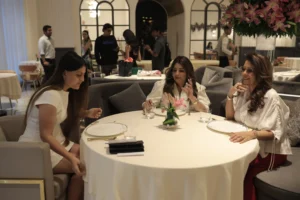
Someone will say, almost thoughtfully, “I’ve been thinking… what do I actually want my life to look like in the next few years?”
Another will quietly admit, “I feel like I’ve been so occupied with everything else that I haven’t been able to be there for my parents the way I want to. Are these things even important for a good life?”
And that’s when you realise something interesting.
Women are no longer just talking about career success. We are talking about life.
The interesting part is that these thoughts often come from women who have already done quite a lot. Women who broke the shackles of society, studied hard, built careers, navigated relationships, raised children, supported families, and showed up responsibly whenever life required them to.
In many ways, we did exactly what we were supposed to do.
But somewhere in the middle of all that doing, another awareness quietly begins to grow. We begin to realise that building a successful career and building a fulfilling life are not always the same thing.
For a long time, success for women followed a fairly predictable script – get educated, build stability, achieve professional recognition, manage the family well, and keep everything running smoothly.
And while women today have access to opportunities that earlier generations did not, expectations have also expanded.
Now we are expected to succeed everywhere.
At work.
At home.
In relationships.
In health.
In parenting.
In self-care and wellbeing.
And ideally, do it all gracefully.
Somewhere between calendar meetings, school schedules, ageing parents, and the constant hum of responsibility, many women begin to ask a simple but powerful question, “Am I designing my life, or simply managing it?”
Because if we are honest, many of us have become excellent managers of life, but not always its designers.
The truth is, women were always taught how to hold life together, but rarely how to shape one that truly belongs to them.
When we look at the women before us, our mothers and grandmothers, their priorities were largely shaped by survival and stability. They focused on creating secure homes, raising families, and ensuring the next generation had more opportunities. Choice was often limited.
Our generation stands in a very different place. We have more education, greater financial independence, broader exposure to the world, and stronger participation in leadership and professional spaces.
But with that freedom comes a new responsibility, the responsibility of choosing consciously. And that can feel unfamiliar because no one really teaches us how to design a meaningful life. Most of us were trained to pursue achievements.
So after years of running efficiently, many women begin to slow down just enough to ask deeper questions.
What kind of pace feels sustainable?
What relationships matter the most?
What kind of work feels meaningful rather than just impressive?
These questions slowly shift the conversation from career building to intentional living.
When women begin looking at life more intentionally, the perspective naturally widens beyond work. We start asking different questions.
Do I feel emotionally grounded or constantly overwhelmed?
Am I making financial decisions from freedom or pressure?
Does my lifestyle support physical energy and health?
Am I nurturing the relationships that truly matter?
Am I evolving as a person or simply moving through routines?
When these pieces come together, success begins to look more complete, more personal, and often much kinder.
However, there is also a quiet irony in the world that many women now find themselves in.
For decades, women worked hard to enter professional spaces that were built around a particular model of success of long hours, relentless productivity, and the belief that ambition must come before everything else.
Now that women are firmly present in those spaces, many are gently asking, “Is this the only way to succeed?”
Because ambition does not have to come at the cost of health.
In Q1 of 2024, 11% of all leave of absence was due to mental health, and women accounted for 71% of it all. (SHRM)
Growth does not have to come with burnout. And leadership does not require constant exhaustion.
According to the Alfac WorkForces Report , women are more vulnerable to burnout, with 75% reporting burnout at work as compared to 58% of men.
Across industries, women are slowly redefining success, choosing work that aligns with their values, protecting their energy, and prioritising wellbeing alongside achievement.
Designing a life rarely requires dramatic reinvention. More often, it begins with small but thoughtful shifts of defining success on your own terms, protecting your time and energy, caring for your health, investing in meaningful relationships, and allowing yourself the freedom to evolve.
If we observe closely, the next generation of women is already approaching life differently. Careers may become less rigid. Breaks for learning, travel, or personal growth may feel more natural. Conversations around mental health, purpose, and balanced living are becoming more common.
Success may slowly shift from constant upward movement to balanced and intentional growth. Less ladder. More landscape.
The Deloitte 2025 Gen Z and Millennial Survey reports that 9 in 10 Gen Zs (89%) and millennials (92%) consider a sense of purpose to be important to their job satisfaction and well-being.
What is reassuring most about this shift is that it is happening collectively. Women are sharing these thoughts openly, with friends, colleagues, sisters, and daughters. We are learning from each other and quietly giving one another permission to think differently.
No one has a perfect blueprint. But perhaps that is the beauty of this moment.
For the first time in many generations, women have the freedom to ask a simple but powerful question, “What kind of life do I truly want to build?”
And maybe the answer won’t arrive all at once. It may emerge slowly in conversations over coffee, during long walks, or while waiting at the bus stop, watching our children return from school.
One honest question at a time. And one thoughtful choice after another.