
By wlc
Published July 7, 2026
For decades, the women who made it to the top often got the same advice – to lead less like a woman. Be more decisive, more assertive, less emotional, and less collaborative.
The traits women naturally brought into the room, like empathy, the ability to listen deeply, the instinct to build consensus rather than assert authority, were framed as liabilities.
However, the business world has spent the last few years quietly walking that back, not with an apology, but with data.
What the research actually says
In an analysis of thousands of 360-degree leadership assessments, Zenger Folkman found that women were rated more effective than men in 84% of the most frequently measured leadership competencies. Not a few categories. 84%.
A separate meta-analysis of 45 studies found that female leaders were more transformational than male leaders and that aspects of leadership style in which women outscored men related positively to effectiveness, while men outperformed women in aspects like hands-off management.
Let that land.
This isn’t just about leadership style. It’s about business outcomes.
A 2024 study from MIT Sloan Management Review found that companies with high-empathy leadership saw 56% higher revenue growth than those that ranked low in leadership empathy. Meanwhile, 77% of job seekers say they are more likely to apply for a role that listed kindness as an important company value.
Empathy is no longer a nice-to-have. It is a hiring strategy, a retention strategy, and increasingly, a growth strategy.
Companies in the top quartile for gender diversity are 27% more likely to outperform financially than those in the bottom quartile. The organisations that are finally putting women in leadership aren’t doing it out of goodwill. They’re doing it because the numbers are hard to argue with.
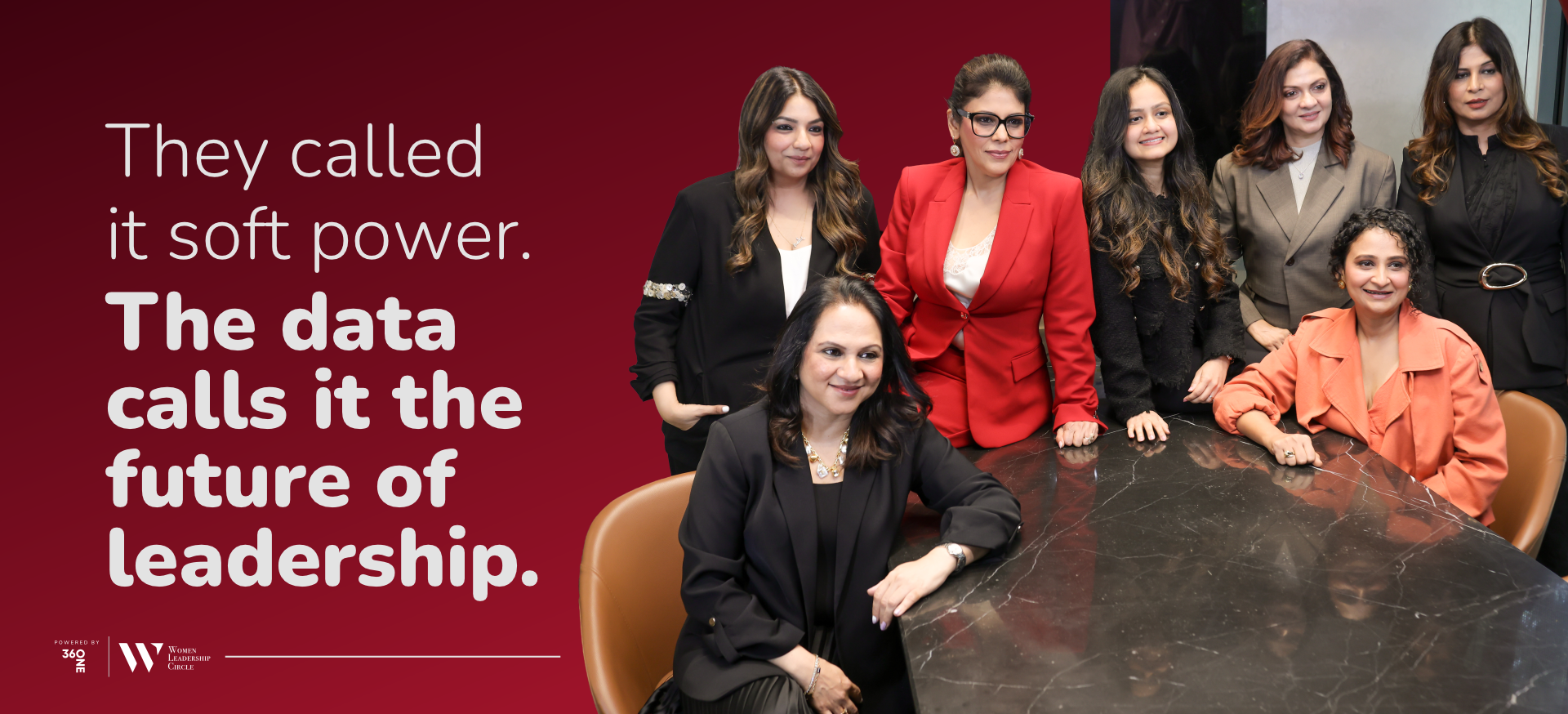
This soft power was never actually soft.
They were inconvenient to a model of leadership built around hierarchy, command, and individual performance. In that model, collaboration looked like indecision. Empathy looked like vulnerability. Building consensus looked like an inability to just make the call.
Women were penalised for leading in ways the data now shows are more effective. They were told to lead differently in order to succeed in a system that was rewarding the wrong things.
The ability to understand and respond to team members’ needs creates psychologically safe workplaces where innovation and creativity flourish. That’s more than a soft outcome. That’s the environment every organisation says it wants to build.
The edge hiding in plain sight
The world of work in multiple ways make these traits not just valuable but essential. Remote and hybrid teams require leaders who can build trust across distance. Post-pandemic workplaces are navigating burnout, disengagement, and a workforce that wants to feel seen. AI is reshaping entire job functions, and the skills that remain distinctly human (connection, nuance, ethical judgment, the ability to hold a room together through uncertainty) are the ones that matter most.
The World Economic Forum’s 2025 Future of Jobs Report finds that 39% of core skill sets will be disrupted by 2030, and the skills rising to the top of every future-readiness list are the ones women have been using all along.
What is WLC doing about it?
At the Women Leadership Circle, we’ve never believed that women need to lead differently to be taken seriously. We believe that the way women naturally lead with empathy, intention, and the ability to build something that lasts is great leadership.
What we’re building is a space where women stop apologising for those instincts and start owning them as strategy.
Because soft power was never soft. It was just ahead of its time.
👁 197 views